
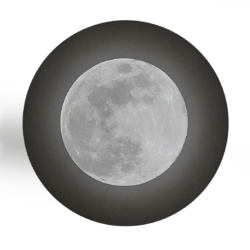
There are a lot of moon gods, or I'd rather say: There have been many worships of the moon, starting with natural peoples and nomads in the form of supernatural women. When the hunter became collectors farmers, they took the sun as their god.
According to Christian critics, it is mainly heathens who worship the moon. But then heathens with a often rich culture and development, who have left a lot of art, literature, philosophy and myths, I think. Myths are an excellent representation of what is happening in the unconscious of man, in addition to the fact that myths often serve to bring social and social customs to the attention of contemporaries. The moon with its influence on tide and tide, the dark seas and everything that is not directly tangible or sunlight difficult to tolerate, of course a beautiful worker for a female representative.
Already in ancient China from far before the recording of the birth of Christ the Taoists have their moon goddess Chang. She took this honor after taking the immortality pills, which a priest gave her heroic husband, as a token of his approval and appreciation. Changoë felt very light afterwards and floating away.
Another notable moon goddess, who, like many other moon gods, is also connected to fertility and reproduction is the Mayan goddess Ix Chel or Icxchel. She is often translated as "She of the pale face." Given the pale appearance of the moon, especially in comparison to the radiant, burning sun, not surprising and a common feature of moon godsdesses. Ix Chel is seen as a sensual woman and as an old col, two aspects that, although not always at the same time, are more common in the pantheon of female moon goddesses. There are also moon gods, for example among the ancient Egyptians, but of course they have more masculine characteristics and I have not considered them.
Of course, classical Greece cannot go unnoticed. Besides the moon goddess Selene, the daughter of Theia who as I write in my blog "The Mystery Moon"Where I call the proto-planet Theia, Artemis is probably the most famous moon goddess here in the west, although probably more under her Roman name Diana. Daughter of the no longer virgin Leto and the eternal adulterous god Zeus and twin sister of the sun god Apollo. She is the goddess of birth and fertility, but also a hunter who lives in the woods with her followers, the nymphs, who were of course chaste and tried to lead a withdrawn life. She also comes on stage as Hekate, goddess of the moon, ruler of the night and... witch.
Maangoddes are often imaginations of virginity, but also fertility and mother goddesses, phases of the moon. So many cultures, so many customs, the list of moon gods is long and this blog is not the place to mention all. However, it remains exciting to see how the moon with its influence on among others water, still the source of life, as a symbol of the female, the dark and unconscious, the young clean and less appreciated old has become in the many myths, which undoubtedly have been conceived and written down by men, indicating that in the spirit of Carl Gustaf Jung, symbolism lies in the archetypes in the catacombs of the human soul, the unconscious. Apparently, man does not escape the dualist divisive woman, man, yin yang.

