
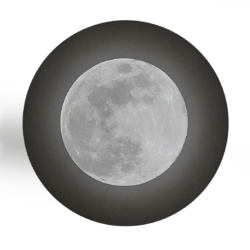
This moon isn't really pink. The term Pink Moon originates in Indian civilization in North America. This full moon is named after moss pink or creeping phlox, known to us as one of the seven types of flame flower. It's one of the first wild spring flowers in North America.
In church calendars this moon is also called the Easterly Moon and its appearance is used to determine the date of Easter Sunday. In the northern hemisphere, the moon is associated with rebirth, metamorphosis and the advent of spring.
The pink moon is smaller than other full moons, such as the supermanes, which shine larger and brighter. This is due to the fact that this moon is the furthest away from the Earth in its orbit around the Earth at a distance of 406,0043 km. Close to the point called apogeum.
The atmosphere near the horizon, especially at moonrise, gives the moon a subtle orange hue. Although the full moon of last night is called a micromoon, it may seem bigger because it is close to the horizon.

